

CHAMPIONSHIPS
Championships
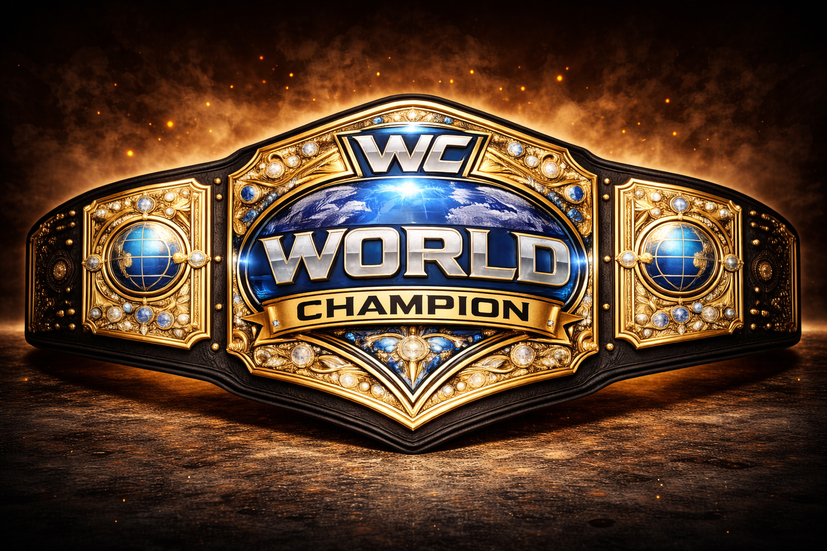

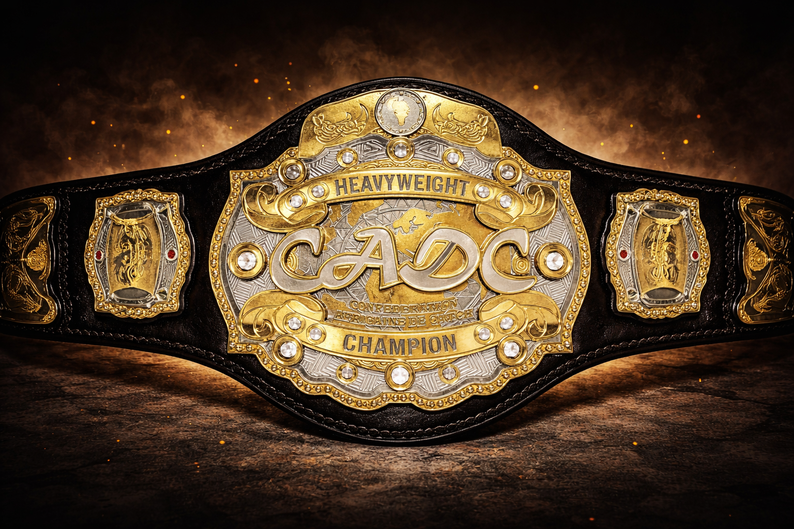
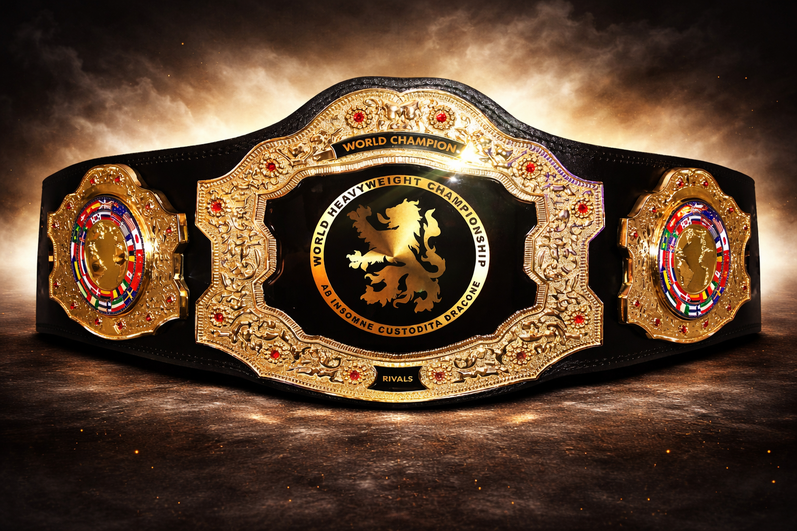
WrestleCorp’s championship framework is structured to define hierarchy, identity, and progression across the platform. Each title operates within a clearly defined competitive tier, ensuring that achievement is recognised not only by outcome, but by context, standard, and position within the wider system.
From premier-level competition to regional representation and internationally recognised partnerships, WrestleCorp’s championships form the core architecture through which performance is measured and elevated.
WC World Championship
The WC World Championship stands as the highest accolade within WrestleCorp.
It represents the platform’s premier competitive standard and is reserved for those operating at the top tier of performance, consistency, and execution. As the leading title within WrestleCorp, it defines the benchmark against which all competitors are measured.
SuperCounty Cup
The WC SuperCounty Cup introduces a distinct competition format built on the representation of place.
The SuperCounty Cup is rooted in identity and local pride—bringing focus to where competitors are from, down to their town, county, or region.
Competitors enter not only as individuals, but as representatives of their place of origin—carrying identity, affiliation, and local pride into direct competition. The format shifts focus from individual performance to place-based contest, establishing a defined and recognisable competitive tier within WrestleCorp.
Inspired by Lanarkshire’s historic role as a large regional “super county”—once associated with major civic and sporting events—it stands as the founding SuperCounty and host of the inaugural competition at Ravenscraig.
The SuperCounty Cup is not defined by national boundary. It operates as a scalable framework, welcoming competitors representing their place of origin, regardless of location. From local towns to international regions, it enables a unified system of competition rooted in where competitors come from.
Within WrestleCorp’s championship structure, the SuperCounty Cup functions as a distinct competitive pathway—defined by representation, alignment, and contest—reinforcing a platform built on clarity, progression, and identity.
CADC Championship
Through international partnership, WrestleCorp presents the Confederation Africaine De Catch (CADC) Championship as part of its broader commitment to global wrestling visibility and heritage.
The title retains its independent lineage, governance, and cultural significance, and is hosted within WrestleCorp with full recognition of its history and standing. Its inclusion reflects a connected platform model—one that supports collaboration while preserving the integrity of established championships.
WrestleCorp’s championships are not defined by volume, but by structure, placement, and standard—forming a unified system that supports progression, recognition, and long-term competitive clarity.
SOVEREIGN CHAMPIONSHIP
This is Scotland.
A land shaped by conflict, forged through resistance, and defined by defiance. From ancient clan rivalries to battles against the auld enemy, Scotland’s history is one of endurance, brutality, and unyielding presence.
The Lion Rampant—long associated with the kings of Scotland—stands as one of the nation’s most enduring symbols of authority and strength. Within WrestleCorp, that symbol is reimagined in combat form.
This is not a conventional championship. It is a sovereign prize—claimed, carried, and defended by its holder. It does not follow ranking systems or structured pathways. It exists through possession.
The championship has no fixed origin within WrestleCorp. It has been taken, defended, and reclaimed—its meaning shaped by those strong enough to carry it, and ruthless enough to keep it.
It is a title that attracts a certain kind of competitor. Not technicians. Not opportunists alone. But those who impose themselves—through force, presence, or calculated violence.
Here, rivalries do not settle. They escalate. Styles do not blend. They collide. Power meets cunning. Size meets intent. And control is never assumed—it is enforced.
While rooted in Scottish symbolism, the title is not bound by nationality. It represents a brutal standard of contest—one that has drawn competitors from across British, European, and American wrestling traditions into direct conflict.
This championship stands apart from the traditional hierarchy. It is not awarded.
It is claimed.